a loan is not what it seem

TALLY STICKS
XXL
GINIBANK &
a loan is not what it seems
Background
The Tally Sticks XXL project draws reference to the device used in the 19th century to carve the debt amounts of business partners, private individuals, or public authorities into a split piece of wood, thus creating a kind of balance sheet for both sides.
How much is something?

10 bln. EUR
1 bln. EUR
100 mil. EUR
10 mil. EUR
It is remarkable that, today, we generally know how much a city, a municipality, or a country are in debt, but their creditors are not named as a rule. Negative assets are mostly assignable, while high asset amounts remain anonymous. While the 14 creditor categories are named on the tally sticks, they do not tell us which individual creditor is owed how much.
The Tally Sticks XXL project explores this debt relationship, and the tally sticks refer to the debt relationship today between Berlin and its 14 creditors.
These categories still reveal nothing specific about the creditors, who unfortunately mostly remain anonymous.
Please help us if you know more about Berlin’s various creditors.
Write us an email to:
kerbhoelzer-xxl@mailbox.org or leave a message on this website.
Fault & Believe
The creditor was given one piece of the wood, while the other piece went to the debtor. The notches were identical on both parts, and when the two pieces were joined together again, the fact that both notches and the grain of the wood matched showed that the information shown on the tally sticks was genuine. It was forgery-proof.
14 categories
1 mil. EUR


AUSLBK
1
Foreign banks
Berlins debts with foreign banks
Branches of foreign banks in Germany.
You can find a list of foreign banks represented in Germany here:


BK SOAUFG
2
Banks for Special Purposes
Berlin’s debts with banks for special purposes
Banks that were founded for a special purpose, to promote a region or a circle of people.
Examples are the Kreditanstalt für Wiederaufbau (KFW) or the Landwirtschaftliche Rentenbank


BSPKASS
3
Building Societies
Berlin’s debts with building societies
Credit institutes that are supposed to promote the collective saving and financing of real estate or residential properties.


GENBK
4
Credit Cooperatives
Berlin’s debts with credit cooperatives
These banks are supposed to act in the interests of their members. Their purpose is to support the economic, social ,and cultural interests of the cooperative. Their target group is generally made up of small- and medium-sized businesses. They see themselves as “values-oriented” banks (e.g., Raiffeisenbank, GLS Bank, etc.)


HYPBK
5
Mortgage banks
Berlin’s debts with mortgage banks
These banks work in the area of property financing.
Money is classically borrowed here using plots of land or real estate as security. They give loans, public-sector loans, or official loans.


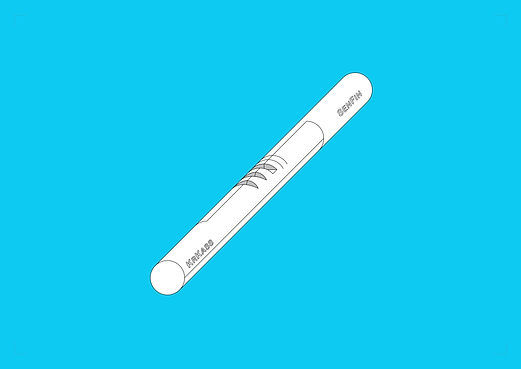
KRKASS
6
Health Insurers
Berlin’s debts with health insurers
Health insurance companies assume the costs for insured parties (pro rata) in the event of illness or medical care.


LDBK
7
Regional Banks
Berlin’s debts with regional banks
Regional or local government funding agencies in the respective federal states. These carry out financial transactions, among other things, for the federal states (the Länder). The Landesbank Berlin now belongs completely to the Sparkassen Financial Group.


PRIVGSCHBK
8
Private Business Banks
Berlins Schulden bei privaten Geschäftsbanken
Unlike cooperative banks or trustee savings banks, private business banks are profit-oriented and centrally organized commercial groups or stock corporations (e.g., Commerzbank, Deutsche Bank etc.).

SPARKASS
9
Trustee Savings Banks
Berlin’s debts with trustee savings banks
Credit institutes that are supposed to promote saving and the formation of wealth and are often held by public bodies. They are directed at the “processing of cashless payment transactions”.


VERSGES
10
Insurance Companies
Berlin’s debts with insurance companies
Insurance companies that are organized in corporations.


VERSORKL
11
Civil Servant Pension Funds
Berlin’s debts with civil servant pension funds
Reserves that are used to secure the payment of pensions to retired higher civil servants (Beamte). These special assets may, for example, be invested in debt securities of the federal states (the Länder) or the central government (the Bund).


ZUSVERSOEINR
12
Supplementary Pensions Institution
Berlin’s debts with supplementary pensions institutions
Company pension schemes for community and civil service. There are 30 supplementary pensions institutions for employees of the civil service.


ANLEUR
13
Investments in euros
Berlin’s debts with investments in euros
Money borrowed by Berlin as loans in euros.


ANL FRW
14
Investments in foreign currencies
Berlin’s debts with investments in foreign currencies
Money borrowed by Berlin as loans in foreign currency.


GINIBANK
The Gini Coefficient
Visitors can sit on the Gini bench. It is situated right next to the tally sticks. The bench itself has a grid, the numbers 0 and 1, and a curve carved into it. These figures refer to the Gini wealth coefficient. In Germany, this coefficient is 0.81, and this figure is also noted in the bench.
The Ginibank
The extent of inequality in a society can be shown using the Gini coefficient. If everyone has the same amount of wealth, the Gini coefficient is equal to 0. If all wealth belongs to one person and nothing is left for everyone else, the Gini coefficient is equal to 1. In the Federal Republic of Germany, the Gini coefficient in 2020 – i.e., before the corona situation – was 0.81-0.83. If you compare this figure with the Gini coefficient in the USA, you will notice that there is hardly any difference. There it is 0.85 to 0.87. This means we have experienced an Americanization of our wealth structure in Germany, as C. Butterwegge – who researches into wealth and poverty – puts it. This extreme inequality leads to polarization in society and to a drifting apart of different social groups.

Wealth
We are only 0.19 to 0.17 percentage points away from total wealth being in one hand. Today, the top 0.001% of the population owns more than 20% of total wealth. The richest 10% have more than 67% net wealth. How can democratic co-determination be reconciled with the maximum concentration of wealth?
How can a state or a city still provide social services and make citizen participation possible if the state or the city first has to borrow the money to pay for these services? And is money not a public good that is largely made available to us by the central banks? So why does the public sector have to borrow money from mostly private actors on the capital market?